
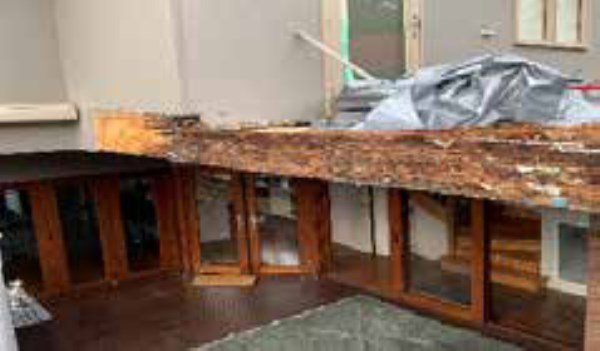
The above images of extensive water damage in a complex unit very nearly ended in a total collapse of the building (see main side beam supporting first floor), and apart from the risk of injury or death if that occurred, black mould was forming within the ceiling spaces below the balcony, which is a documented health hazard.
What started out looking like a minor defect in this instance, once opened, evolved into a major re-build.
The cause
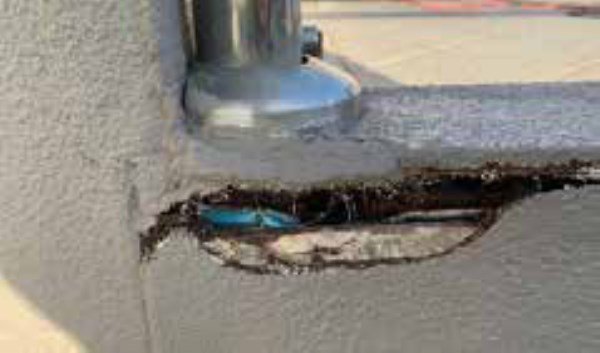
The design and method used by the original builder was grossly inadequate to prevent water intrusion, relying only n acrylic render as a waterproofing barrier and then fixing a balustrade through the acrylic render allowing water ingress through the screw fixings.
This example shows how some simple mistakes can lead to a dangerous and hazardous situation for unsuspecting homeowners.
The dangers of water ingress
Water ingress is a common problem in buildings, which can result in a range of issues including structural damage, damp, and mould. As a waterproofing consultant and remedial builder, we have seen many cases where water ingress has been caused by building defects and not just poor waterproofing methods or incorrect materials being used.
In this article, we highlight some of the common building defects that can cause water ingress, and how they can be prevented.
Poorly installed or damaged roof covering: One of the most common causes of water ingress is a poorly installed or damaged roof covering. If the roof covering is not installed correctly, or if it is damaged, water can penetrate the roof and enter the building. This can cause structural damage, damp, and mould. To prevent this, it is important to ensure that the roof covering is installed correctly and is regularly cleaned and maintained.
Poorly designed or installed gutters and downpipes: Another common cause of water ingress is poorly designed or installed gutters and downpipes. If the gutters and downpipes are not designed or installed correctly, water can overflow from the gutters and enter the building. This can cause damp and mould, as well as damage to the building’s foundation. To prevent this, it is important to ensure that gutters and downpipes are designed and installed correctly and are regularly maintained.
Poorly designed or installed flashings: Flashing is a material (zincalume or Colourbond, aluminium, etc) that is used to prevent water from entering a building around openings such as windows, doors, and vents. If the flashing is poorly designed or installed, water can penetrate the building and cause damage. To prevent this, it is important to ensure that flashing is designed and installed correctly and is regularly inspected and maintained.
Cracks in the building’s structure: Cracks in the building’s structure can also cause water ingress. If there are cracks in the building’s structure, water can penetrate the building and cause damage. This can also result in damp and mould. To prevent this, it is important to ensure that the building’s structure is regularly inspected, and any cracks are repaired as soon as possible.
Poorly designed or installed cladding: Cladding is a material that is used to cover the exterior of a building. If the cladding is poorly designed or installed, water can penetrate the building and cause damage. This can also result in damp and mould. To prevent this, it is important to ensure that cladding is designed, fire resistant and installed correctly, and is regularly maintained.
Poorly installed or damaged windows and doors: Windows and doors are also common areas where water can enter a building. If the windows and doors are poorly installed or damaged, water can penetrate the building and cause damage. This can also result in damp and mould. To prevent this, it is important to ensure that windows and doors are installed correctly and are regularly maintained. We often see cement sheet abutting a window frame and just a sealant installed (at best) to prevent water ingress. This sealant breaks down over a few years and cracks or delaminates, allowing water ingress.
The solution
Water ingress is all too common in buildings and can result in a wide range of issues including structural damage, damp, and mould that are extremely costly to rectify.
However, many cases of water ingress can be prevented by addressing common building defects such as poorly installed or damaged roof covering, poorly designed or installed gutters and downpipes, poorly designed or installed flashing, cracks in the building’s structure, poorly designed or installed cladding, and poorly installed or damaged windows and doors.
As a waterproofing consultant and remedial (waterproofing) builder for 43yrs, I would strongly recommend that building owners and managers regularly inspect or have their buildings inspected by the appropriate professionals and address any issues as soon as possible to prevent water ingress and its associated problems.
In pointing out the need for regular inspections, they need to be carried out by a person with a holistic understanding of what causes leaks. I have been to, far too many buildings that are “seen to conform” to the plumbing code for instance, and yet are found to have leaks caused by rain/ wind driven under flashings on roofs that would be deemed “compliant” on visual (non-invasive) inspection.
Underground basements are also prone to several problems due to their location and the environment in which they exist. One of the main issues is water ingress that can occur through cracks/gaps in the basement walls or floor, or through poorly designed/installed waterproofing and/or poorly installed drainage systems. This can result in flooding or dampness, mould growth, and even structural damage.
Another common problem with underground basements is poor ventilation, which can lead to a build-up of moisture and pollutants in the air. This can cause health problems for occupants, as well as damage to the building’s structure and finishes.
One of the biggest challenges in Australia with underground work is that there is no Australian standard for designing or constructing underground spaces. Each project is unique and requires careful consideration of the site conditions, building materials, and environmental factors. This can make it difficult to ensure that underground spaces are built to a high standard and that they will perform well over time.
To address these challenges, it is important to work with experienced professionals who have expertise in underground construction and waterproofing. They can help to identify potential issues early in the design process and recommend appropriate solutions to mitigate them. Regular maintenance and inspection can also help to ensure that any issues are addressed before they become major problems, and that the basement remains safe and healthy for occupants.
Article by: Paul Evans,
Remedial Waterproofing Consultants Reg Builder – DBU & CBU Unlimited
Leave a Reply